Episode Transcript
[00:00:04] Speaker A: Hello and welcome to Talking Food with Bidfood, the podcast where we dish up the latest ideas, innovations and insights from across the food service industry.
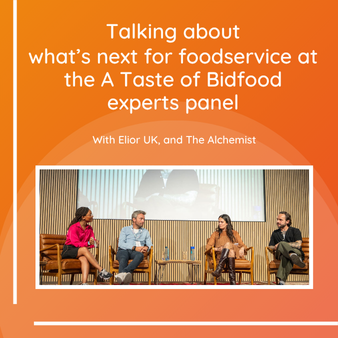
I'm Rhea, Research and insights manager at Bidfood and your host for today's episode. Now this episode is a little bit different as it is a recording of a live panel discussion held at our annual supplier showcase, Taste of Bidfood. And it was an extra special event as we celebrated 25 years of bidfood. Hope you enjoy listening.
Welcome everybody.
My name is Rhea, I'm a research and insights manager here at Bidfood and I'll be your host of today's panel.
I'm joined today by three lovely guests. We have Tim Adams, Bidfood's very own Director of marketing and he'll be sharing his outlook on the future projections of the industry landscape for the position of a wholesaler provider. And then we also have Polly Lammy here today. She's head of Commercial and Brand at Elior uk where she leads innovative strategies to drive revenue growth.
Her decade of experience expands across hospitality, retail and contract catering and she thrives on delivering impactful solutions and recipes, range innovation, digital transformation and combines creativity with data driven strategies.
And Tom Rowley, he is head of kitchen operations at Alchemist bars and restaurants and he has a proven track record of delivering high food quality and financial performance, particularly around menu development and innovation. I think to start off with, we're just going to do a warm up question.
I'll start with Tom.
When you think about the future of food service, what's the first word or trend that comes to mind?
[00:02:02] Speaker B: Be food with a conscience. So I think everybody is looking for food, ethically sourced, impact it has on the environment, the kind of health benefits it has. It's not just about the product but about where it comes from and what it can give for you and do for you.
[00:02:17] Speaker A: Yeah, great.
And Tim, from a wholesaler perspective, what would you say is the biggest shift in the market that you've seen in the last five years?
[00:02:30] Speaker C: Probably the.
Probably the leaning towards data and the data requirements from customers. So we've seen both from a legislative perspective from government, but also a lot of the brands want it for themselves as well. The requirement for us now to provide so much data and information into our customers has definitely been probably the biggest change I've seen over the last few years and I think will continue to evolve as well over the next year. Probably five to 10 years. Well, and that links in with what Tom was saying on sustainability as well. We're seeing People ask for carbon footprinting on.
On individual products so they can build that onto menus. So, yeah, who knows where it'll go? But that. That data requirement for me is. Is definitely the biggest change.
[00:03:12] Speaker A: Definitely.
And the same question goes for you, Polly. What do you think?
[00:03:16] Speaker D: At the moment, we're really seeing a move back into human interaction. The last five years, obviously, we've come out of COVID where everything was digital ordering like that, and I think people are really looking to move back into the customer service and really starting to think about the basics. Really good. You know, what are we doing? That's that hospitality at its core. It's not flashy, it's not got its wings on it, it's just this is good service. I think the other really crazy trend that I think is going to hit everyone is a Zenpic. Oh, yeah. And that kind of fat consciousness, if you will. Something I read, something crazy. More people are on a Zen pick than a vegan now. That is insane. And it's almost the same as vegetarian people. So for me, like, that is going to change the way we do things. Think portion sizes, fewer meals, fewer occasions. And that, I think, is something we all have to bear in mind.
[00:04:07] Speaker A: Yeah, well, definitely something for us to all think about.
So starting, we'll be talking about a range of different themes today, but we'll start off with talking a bit about customer expectations.
So a question I'd love to ask you all, if anyone likes to take the floor, is how are customer preferences evolving in your sectors?
[00:04:33] Speaker B: The customer is definitely becoming more demanding. I think that's driven by social media.
So there's the constant pressure of people showcasing what they're eating and drinking and where they're going through social media.
So at the Alchemist, we take that into consideration. So when we're developing dishes, it's about the aesthetics, it's about the theatre, it's about the interaction.
Something that people are going to want to put on Instagram and kind of showcase to their friends and family.
We're also doing a lot at the moment about reinvesting into old sites to keep them looking fre like places that people are wanting to go, wanting to shout about.
And also, I think people are definitely making their opinions based on reviews.
So at the moment, you know, one review on a website can do such a damage to a business.
So we make sure that our teams know that every single guest, every single dish is so important for the business because that is kind of what's showcasing what we're all about.
[00:05:29] Speaker A: Yeah, brilliant.
And what about you, Tim, have you got any specific examples of how you've had to adapt recently in terms of like the customer expectations?
[00:05:39] Speaker C: I think so. I think we're having to adapt the products that we sell into customers currently. I mean, Ollie was touching on the sort of. Is it called a zempic.
[00:05:49] Speaker D: Yeah.
[00:05:50] Speaker C: Trend. But I think generally consumers are thinking more about what they're putting inside them anyway and they want to understand what's in the products that they're consuming. So whether that's individual products that are packaged or whether that's a addition, how it's made up, I think our job as a wholesaler has been to a probably try and make more, I guess, healthier decisions around the products. So our own brands, etc, and our exclusive brands, but also trying to clean deck our products a bit more as well. So trying to take out some of the unnecessary ingredients, stabilizers, etc.
Because I think that's where the consumer wants to go to. I think we're probably not too far away from, you know, maybe it won't happen. Maybe it will, but the whole ingredient declarations have to be put on menus and I think when that happens, clearly, again, being able to have shorter menu, shorter ingredient decks in there is probably going to probably play to the sort of more sort of farm to fork connotations that consumers want to see and want to feel.
[00:06:49] Speaker A: Yeah, it's about kind of like clarity.
[00:06:52] Speaker C: So, yeah, I think it's just, I think it's just trying to, the industry is trying to clean up a little bit. And I'll agree with what Tom says, people, consumers are getting more demanding. They want more from their experience when they're eating out and whether that's the experience in service or whether that's just better quality food, fresher, better ingredients. If consumers are going to eat out less than when they do eat out, they're going to want more for it.
[00:07:16] Speaker A: And Polly, how do you balance customer demands with operational realities? Coming from a perspective of Elio, I.
[00:07:25] Speaker D: Think that's a really interesting question. Obviously looking at this demanding customer that we all know is becoming more demanding, quite often I actually see there's a big disparity between what you think they want, what they actually want. So that demand might not actually be translated into, you know, pound value. For me, you have to look at the data. If you're not looking at what people are actually spending their money on. You know, for me, I like to think of it for every pound someone is spending, they're really putting a vote into that column. Of this is what I'd like. And every vote you need to look at, you need to understand what the polls have come out with and work out how that can translate to you. And I think, you know, for me, in contract catering, it's also very interesting, we have two different customers. We have the client and what they want to do and what they want to deliver. Their overall kind of CSR goals, their carbon reduction targets, but that doesn't necessarily translate to what the customer wants on the shop floor of a factory. They don't want their plant based vegan burger, they want their pie to get through the day. And that's a real challenge to balance it. So operationally, I think, again, if we're looking at the data, doing fewer things but better is the right way to do it. If you can demonstrate the most important thing to your client and to your customer rather than trying to fulfill all of it, operationally, it's simpler, you can do a lot better. And it's just trying to remember what the goal was in the first place rather than just becoming a yes person.
Show them what it is that they're looking at. Show them that you're trying to support their customer, you're doing everything with them and make it a partnership and that conversation will make it a lot easier.
[00:08:53] Speaker A: Yeah, those are really insightful points.
[00:08:55] Speaker D: Thank you, Polly.
[00:08:58] Speaker A: So, yeah, that was just around, yeah, customer expectations. But I'd like to move on to a bit around innovation and opportunity. I know you touched on a little bit about that, Tom, but where do you see the biggest opportunities in innovation and food service? Oh, you're raising our eyebrows there.
[00:09:17] Speaker D: Good. I think, I think everyone's always taught, you know, obviously food is about taste and smell. Then we were really focused on texture and sound and all the other bits. I think we've kind of almost moved from the senses into emotion. Now you have to have an emotional connection to what you're doing. Experience is one thing, but an emotional experience is the other. And that's going to really hook you in. If you look at what a brand is, they've got that good quality and that emotional attachment that is what drives people to behavior. Now. You know, nostalgia is absolutely huge. People love looking at that. If you look at how Coke, Pepsi, people like that have rebranded, it's that nostalgic kind of 80s 90s look. And for me, I think that is the real important trend that we're going to see in the next few years. Not just your senses, how you feel about it. What's that provoking it's like art, isn't it? Yeah. Evoking something when you experience it.
[00:10:05] Speaker A: It's a great point. I was actually touching on that earlier in our Trends presentation about meaningful experiences because people are wanting meaningful value but also wanting meaningful experience as well. It's kind of like the thread that kind of ties everything together.
[00:10:17] Speaker D: Exactly. Like, what did you eat as a child? You're going to probably eat that again as an adult and really enjoy that because it's like the film Ratatouille. You know, when he has that little bit of vegetable, it brings him right back and it makes him a kind person. I think that's what we can achieve. Hospitality.
[00:10:30] Speaker A: Yeah. Yeah, definitely.
What about you, Tom? How do you. What's exciting you most right now in terms of innovation?
[00:10:38] Speaker B: I think collaboration is huge at the moment. So you see in restaurants do collaborations, different products and manufacturers doing collaborations together, just bringing something new to the table. And I think what's really important is the likes of Bidfood bringing in new businesses, new products into the business.
Like everyone really supports kind of independent businesses, so giving them that platform to then get international accounts so that products can be seen. You know, we've got Glasgow to Portsmouth and getting new, exciting products seen all the way across the country. I think it's super important. And some really good stuff coming through at the moment.
[00:11:15] Speaker A: Brilliant. Can you think of a specific product or a product that you think has hit the mark potentially in your sector that's really made a tangible difference?
[00:11:24] Speaker B: I think product wise at the moment it's about.
I think allergies is a key driver and then I think obviously calories and protein content. So we work with a brand called Pastry Room that have taken out. They're a non gluten supplier. So the majority of our menu is non gluten, which is gluten free. Diets is huge at the moment. The sea like diets is huge. So getting suppliers like that, they've got a product that you can't taste the difference, you can't feel the difference, but then you can. Caters for much more people is super important and brands that are doing things like that, that are then finding a good product but appeasing to a wider market is what's really important at the moment.
[00:11:59] Speaker A: Thank you for sharing. Thank you.
Tim, do you have anything to add on that or is there anything that is really exciting you in the industry at the moment?
[00:12:06] Speaker C: So much is exciting.
So excited.
I think Polly touched now with that emotional bit really, which is we've brought in open doors through Bidfood which is bringing sort of small suppliers in. And that's where we've seen a lot of information innovation come through. It's not to say big brands aren't innovating, but I think it's fair to say that the smaller sort of brands can be a bit more fleet of foot. So we've seen a lot of innovation come in that area, particularly in areas of sustainability as well.
I think customers are looking for that emotional connection and I think they can quite often find that with the smaller brands. There's quite often founder stories behind it, they're B Corp accredited, etc. And I think customers really resonate with those stories and with that whole package that those small suppliers from open doors provide. So, yeah, I mean, whether it's Leghorn, you know, meats, where they're using sort of X laying hens to bring that sort of, what would have been a relative waste product back into the food chain to be used again, a really good quality product that wasn't really thought about before. For me, that's innovation. It's providing a solution to customers that, you know, eats well on the plate, is cost effective, but is also meeting a sustainability need as well. So there's loads, loads to be excited about.
[00:13:19] Speaker A: Yeah, brilliant. And that actually leads me on to my next kind of topic around sustainability. We can't not speak about sustainability in this chat. I think, you know, whether it's, you know, social responsibility, environmental or, you know, seasonal packaging, there's a lot to speak about.
So I guess my question is how is sustainability shaping decisions in your sector or in wholesale?
[00:13:43] Speaker C: From a corporate perspective, at Bidford, it's shaping us because we're getting a lot of demands or requests from customers around information on what we're doing on carbon sustainability, etc. So there's this massive crave for information from both from ourselves with our suppliers, but our customers with us. I don't think the end consumer is actually that bothered, but we're all trying to meet various legislative targets. Guess what? If I had a wish, it'd be that we probably spend a little bit less time on reporting and a little bit more time on the doing. I think there's loads of stuff that we can do as an industry to be better, to be more sustainable.
We're doing stuff at the moment on looking at how we're routing, looking at the types of fuel we're using in vehicles, looking at how we're getting products delivered into us, how they're packaged, etc, what products we're buying. For me, that's where the real difference can be made. But I think probably at the moment we're still spending too much time on the analysis of data reporting of data rather than the actual doing of stuff that can make a difference.
[00:14:43] Speaker A: Really good points. Thank you. Thank you for sharing.
[00:14:48] Speaker D: I agree with that people.
I mean greenwashing is something we all know happens and it's this data reporting that's so time consuming.
I think from our side that means that we are so reliant on our supplier partners now. It's really pushing us not to just be looking at our supply chain for product but actually forming partnerships. So actually makes you closer with the people you work with. Because you know, we can't achieve our net zero targets if our supply chain isn't achieving as net zero targets if our distribution isn't doing it. And so, you know, we're no longer an individual if we want to hit those goals, we have to work together. And that's something quite new. And I think it's something that we've not been so interlinked in that way before. So it's really pushing us to be critical in that way. And I think, I mean we all know it's non negotiable now to be looking at that.
So what's that next step? I don't know the answer to that. But you know, how do we go from these goals in 2030, which isn't that far away now, to actually achieving it? And what does that look like in the new world whilst not hampering growth? I think that's the other challenge. Again look at this consumer behavior. They will say they want to buy sustainably, have zero plastic in their retail products but actually they're not yet voting in that way. They're not yet. People say they're willing to spend more on products that are sustainable. We're not quite seeing them put their money where the mouth is. So we need to work to get that decision to go forward. You know, if we want to be sustainable as a company, we have to take that hit. We have to have that faith that in five years time people's behaviors will have shifted and we can shift them ourselves by not giving them the choice.
It's just a brave choice to make.
[00:16:21] Speaker A: Yeah, and you mentioned around supply chain, but how do you see the collaboration across the supply chain working in the practical kind of term?
[00:16:30] Speaker D: That is a good question. I think it has to be transparency. You have to be transparent about what you're trying to achieve. We all know that there's negotiation that goes on with your suppliers and everything to get what you want. But how do you get. Well, exactly. How do you, how do you achieve a collective goal without being honest and transparent about it?
That's where you end up being that risk of greenwashing. You have to be honest about what your goals are.
[00:16:54] Speaker A: Yeah.
[00:16:54] Speaker D: And be fair. If they're not going to line up and just say, okay, that's fine, maybe we're not the right people to work together and, and move on from that as opposed to just trying to make it fit.
[00:17:03] Speaker C: Yeah, I like that as well because I think it points to the point around having long term meaningful partnerships between customers and, and suppliers, whether that's manufacturer suppliers or wholesalers, ourselves with the end customer. Because you can only do this if you're working together on a sort of long journey into 2030, into 2040, etc. Where you've got joint strategic goals moving in the same direction. So Polly makes a really good point on that.
[00:17:30] Speaker A: And Tom, just to kind of feed you a bit more on conversation, what trade offs do you, do you think you face between cost and sustainability?
[00:17:39] Speaker B: I'm a chef, so naturally I hate wastage, of course. So every part of food has a purpose. So when we're doing menu development, we look at multi use, we look at using the off cuts for one, for another kind of recipe and stuff like that. And again, with the rising cost in food, it's about making sure every penny counts so that we don't out price our customer base. You know, we need to make sure food is affordable because again, we're all part of the same sector. So you know, we need to be able to have guests coming in to be purchasing food to make the whole chain work.
So there's a balancing act. But in regards to kind of like sustainability, you know, we work with bidfoods, we have reduced delivery days, overnight deliveries, we look at the packaging, we look at pack sizing and all these kind of things all have like little incremental differences that all add up at the end of the day.
And I think there is just such a focus from the guest base that you have to be sustainable, you have to be doing all the right small wins to make a difference overall.
[00:18:36] Speaker A: Definitely.
[00:18:36] Speaker D: Yeah.
[00:18:37] Speaker A: Thank you, thank you for sharing.
So we're going to move on a bit around technology and digitalization.
So technology definitely is kind of reshaping the food service industry in so many different ways.
So what role do you think technology will play in food service in the next five years or what can it play in food Service whichever one you feel like.
[00:19:01] Speaker D: Oh, many.
Technology is just absolutely fantastic. I think robots are going to be a big one. If you combine robots and AI, it's a scary thing. It's going to happen. I went to this amazing food show in Chicago and they had a robot waiter who could make your cocktail and you didn't have to do any. You just went up and you said, hello, can I have a cocktail? And out it comes and.
Unbelievable. I think technology like that is.
We have to look at it. It's coming for us whether we like it or not. I know everyone worries that it's going to steal our jobs and all sorts, but I don't think it is. I think it's going to enhance our jobs. It gives you more time to be hospitable, to do the bits that you don't want, the admin and things like that. It's there to support us. And I think technology can also make agentic. AI is coming.
We're already looking at as a solution for our allergen management. We know that's on the rise. We just can't keep up with that trend. We can't be creating, you know, allergen diets for every single person anymore. We're looking at AI to solve that. You know, I know banks and FinTech already have AI employees. Why can't we? You know, hospitality tends to be a bit behind the curve, but if we look at it now, we can do something really amazing with it.
[00:20:12] Speaker A: Yeah, yeah, it's a good point. But do you think it removes that human touch? Do you think technology kind of should be more about back of house or do you feel like that, you know, as you talk about robots and things like that? Because we were speaking about meaningful connections and things like that earlier in the conversation. So what your.
[00:20:27] Speaker D: Yes and no. It depends on how you approach it. So I saw again, it was at this. It was like a machine that you could program in different recipes and one of their kind of key USPs was that this machine could hold and archive recipes from, from a bit of our culture that we might lose. So it was actually being used as a social tool to preserve culture and history in a way that we're losing these skills, you know, it's not what we want to do anymore. So in that way it's really supporting that emotional connection and we can provide these dishes that we couldn't do otherwise, we might lose over time. And it's just how you apply it. That's the way to do it. Again, if you look at trying to replace the. Your teams again with digital. We did, we tried everything through an app. Didn't work. It's about enhancing and supporting and seeing where technology is, about creating the experience, enhancing it, not replacing human.
[00:21:17] Speaker A: Of course, yeah.
[00:21:18] Speaker D: You know, they're there to help, not to replace. It's just one of the mindset. I think if you do it right, you'll do a fantastic job.
[00:21:24] Speaker A: That's a great bite sized clip. I think it's a great one.
Yeah. Enhance and not replace. Brilliant. I see you want to.
[00:21:31] Speaker B: On the other side of the fence.
[00:21:32] Speaker A: Oh, do you let us know.
[00:21:34] Speaker D: Definitely.
[00:21:35] Speaker B: Against the rise of the machines.
I work in hospitality.
[00:21:39] Speaker C: Not a Transformers fan.
[00:21:42] Speaker B: I work in hospitality. It's about being hospitable, it's about the human connection. It's about being sociable, being a chef, it's about being creative. So for me, the introduction of technology, it's about working smarter, not harder. So order mundane tasks, you know, the inventory, the, the stock takes, the costings, the road to the labour budgets that. I'm all for it, but I still want to go into a restaurant, be served by human, have that interaction, see somebody, make a drink, see some fire in the kitchen, somebody cooking.
For me, that's what's really important. And we use technology in the kitchen so that the chefs can focus on the teams, focus on the food and focus on the cleanliness and front of house. You can focus on the people and that interaction. And for me it's to support, but it's definitely not to kind of take over.
[00:22:31] Speaker A: Different perspectives, which is still really interesting.
Anything else for you to add, Tim?
[00:22:36] Speaker C: They've both nailed it, really. I think the.
I agree usually what they both said, because I think they compliment. I think the whole bit around enhance, not replace is kind of what Tom's saying as well, really, which is, you know, take away the boring jobs so it allows the human element really to thrive. Then I saw a quote at a conference a week or so ago which said, AI won't take your job. But actually if you're, you know, if you're not embracing AI, someone who does understand AI will replace your job. So I think you've got to embrace it to move forward, but it doesn't mean it's going to take away what you're doing. But actually if a task used to take you four hours and now it can take you five minutes, then there's no point just sitting there with your head in the sand doing something for four hours, which could take you five minutes, but actually it's about how do I repurpose the time, then that. Those three hours, 55 minutes that I've got back into a different way. I agree hugely as well. Hospitality is a.
Is a. Ollie touched on it earlier. It's an emotional industry where people connect. We can't lose that. We won't lose that either.
Again, technology will play a part in making the order experience better. It'll provide more data to customers.
We already see it now. You can track your order, you can get your invoices online, you can pick up your credits. So these are all small things. Also, data will be able to tell you as well, like actually which sites are buying, which types of products are they buying, best value. And actually be able to do that through things like chat, GBT or copilot in the flick of a switch. Whereas before, it might have taken you a half a day of analysis to get that information out. So I think there's a lot of stuff that it can do, but all that does is then it just moves the conversation on further. So rather than spending half an hour, half a day doing that, you can then spend that half a day solving the problem rather than trying to understand what the problem is to start with. So I think it's exciting.
Yeah. I'm not a Transformers fan either, but. Yeah, I think you've got. I think, yeah. As a business, no one's saying you shouldn't embrace. I think we're in agreement. You've got to embrace it. I just think how you embrace it.
[00:24:29] Speaker A: I embrace it.
[00:24:30] Speaker C: I think if you come too impersonal, then you will turn customers off because people like dealing with people and I think that won't change.
[00:24:39] Speaker A: Yeah.
[00:24:39] Speaker D: So I kind of fallen into my own trap that I do.
People always think that technology is like AI and robotics, but actually it's so much more than that.
[00:24:48] Speaker A: Yeah.
[00:24:49] Speaker D: If I think to the Campbell's Factory tour I've just done, it's the way that they've got tech to, like, pack the mints. So for me, it's really important we look broadly at what that means, because, again, I've done my own thing of going, oh, technology, innovation and all that. It must be robots and AI. It is a big part of it. But technology is so much more than that. It's different food formats that we can do. It's thinking about things in a more critical way. And for me, for us to look at technology going forward, it's important to have that breadth of vision on it as well and not. Not be so narrow.
[00:25:19] Speaker A: Yeah. And it's basically just another like version of innovation really and just being efficient in a different way.
[00:25:24] Speaker D: You know, tech, you know, everything, technology, a shop, a knife. Is technology, you know, a different material to do that. And that is the other way to think about it. Don't get caught up in one stream, really think about where tech can support all these different elements. As you said, it's about supporting to free up people's time, stop food, wastage this, think about what your problem is and find the tech to fit that. Don't find tech and go, oh, that might be cool in my business.
[00:25:47] Speaker A: Yeah.
[00:25:47] Speaker D: Thinking about it the other way around I think is really important.
[00:25:50] Speaker A: Yeah. And that just leads us, my last question around technology and we'll move on to the next topic. But how do you decide what's worth investing versus what's a passing trend or a fad?
[00:26:02] Speaker D: That is the golden question, isn't it?
No idea.
[00:26:06] Speaker C: If you knew that, then you would never have to try anything. The reality is you have to try different things. And you do.
I'm sure any business does. There's some things that are quite low cost tech options where you just try them and play with them and they, you know, it might cost you a bit of time. If they don't work, they don't really cost you any money. Then there's some quite big investments in it. Could be plant, could be machinery, could be infrastructure, or it could be whole new systems to support, you know, your allergen management in the background. Those require a lot more, you know, in depth decision making. So for me it's, I think the big decisions where there's a lot of funds, you know, involved in investment will always require a lot of deep thinking. But I think the beauty of technology is there's a lot of stuff now that is really, really cheap entry which I think you can just go at, try and if it doesn't work, just move on. And actually it might not work today, but don't discount it forever. Look at it again in a year, two years and it might actually be far more suitable as a tool because some of these things as well, they might suit retail but they won't suit food service yet. But actually they might evolve over time if the demand's there.
[00:27:08] Speaker D: Yeah, great point. You've got to trial, haven't you? You've got to be bold and brave, but do it in a sensible, measured, data driven way. There's nothing wrong with being wrong, but you don't want to be wrong and break the business. So considering how you do it is important, having the right process in place and then again, just looking at your data, if it's working, you should know what you're measuring. If you don't know what your starter like your goal is, how do you know if it's worked? I think the Metaverse is my favorite example. What a load of nonsense that was. Everyone was buying real estate, like investing in restaurants and like building cinemas.
[00:27:46] Speaker C: What, me and Tom went co owners on a cinema. Yeah.
[00:27:49] Speaker D: You actually going, would you like that one has. That was such a fad.
[00:27:56] Speaker A: It was huge.
[00:27:57] Speaker D: You don't know if that's going to happen. So just being careful.
There's a balance between bold and careful and being really honest. You can, you can see if another sector has done it first. Again, if you look at people who are really evolved, the people who are on that cutting edge fintech, big data like that, they're testing and learning it for us. We can take that and apply it to us. We don't have to be just looking at our competitors to see what's innovative. These people are already doing it. They're showing AI working and reducing costs. They're showing how technology can improve.
Yeah.
Take it from there.
[00:28:32] Speaker A: Yeah, Great point.
[00:28:33] Speaker D: You have to be first.
[00:28:35] Speaker A: Yeah.
Thank you. Thank you for sharing, Colleen.
So the last kind of theme is just around collaboration and partnerships.
What do operators and suppliers need from each other to be future ready?
[00:28:52] Speaker C: I think Tom goes first on this one.
[00:28:54] Speaker B: Really simple, but it's. It's good relationships.
[00:28:56] Speaker A: Yeah.
[00:28:57] Speaker B: It's good communication. So I've been with Alchemist for 10 years and I've had account managers with Bidfood for 10 years now. Whether it's Direct Seafood, Oliver Care, Bidfood and that supply relationship is what has kept the business strong.
You know, we've had times where we've come out of COVID and there's been Depots moving and to help out and had some really, really tough, challenging times. And it's a relationship in the business that's kept it going. So, you know, we've had times where we've been in struggles and we've had Bidfood help us and there's been times where we've had Oliver Kay move with Depots and his challenges and we worked together and we got through it and that's what kept the business going. And as we've grown, you know, we've been aided by the supply chain to help us grow with that as well.
[00:29:41] Speaker A: Brilliant. Great that the relationship has kept so strong throughout the years and any of you guys where do you see the biggest gaps today when it comes to kind of operators and suppliers?
[00:29:55] Speaker C: I guess that's not a very positive question.
[00:29:58] Speaker A: Oh, sorry. Oh yeah, that's true. It's not really, is it? You've been talking so positive for the whole day. That's true. Okay, what about, do you want to answer it?
[00:30:09] Speaker C: I really liked Tom's point around, you know, what makes the sort of collaboration. I mean, you could say, where's the gap? The gap is the opposite of what Tom's describing to me really. Where you haven't got trust, where you haven't got collaboration, where you are in short term, you know, very kind of transactional partnerships. That, that for me is where things fall down. I think, you know, something like Covid is great example of where you relied, everyone relied on those partnerships and I think if you were in a transactional relationship at that point, you probably had a very, very difficult period through Covid, were more difficult than you would have had otherwise. For me, this is what Taste of bidfood's about really. It's about bringing suppliers, customers bid food together and you know, just people speaking to people. We had a lot of talk about technology, but that collaboration really comes in human interaction. That's what hospitality is about. Yes, we've got a work on a joint agendas, whatever that is, whether it's CSR or product innovation or you know, menu engineering to take out cost or food waste or whatever, all those are very valid areas to work on. But it all starts with people working together on a, you know, a joint mission and, and wanting to do that. And for me the, the only word I think I would add to what Tom said is trust really. And that's just high levels of trust between supplier, customer, wholesaler, etc. Which is what I look for.
[00:31:25] Speaker D: Yeah, I think the word people is interesting. Sometimes we forget, you know, we're not comfortable company to company. Ultimately we're person to person. And in the hospitality food industry we have to remember that even more. It's real products, it's real people, it's, you know, it's a real thing we're serving. We're not creating like an imaginary number that moves on a screen up or down. It's, it's something tangible and it's the people that deliver that that's important. So when that breaks down, when you are thinking short term, you're not thinking about your long term, we all get some squished, squished, squeezed and pushed into, you know, end of year goals and short term targets. You have to do that considering how you're making other people feel. And that partnership is so important.
Yeah.
[00:32:09] Speaker A: Thank you.
Okay, great. So I think that's, we're coming towards the end of our, of our discussion, but there's a few more wrap up questions I'd like to ask you guys.
So we've touched on a lot of different aspects today, but if you could give one piece of advice to this audience about preparing for the future of food service, what would it be?
[00:32:31] Speaker C: Anyone got that one already?
[00:32:34] Speaker B: I can go if you want.
It's a challenging year for hospitality. I think there's been many, many obstacles and challenges and curve walls.
Everyone just needs to go out and eat and drink and enjoy hospitality because that's what's going to protect. It's down to demands. You know, we're in a point in life where there's lots of kind of financial difficulties and things like that, but that one meal a month makes a massive difference. That's what is protecting food service. It's the manufacturers producing the food goes to the supply chain, that goes to the restaurants, it's providing the jobs for the chefs, the servers.
So it's just really important just to go out and enjoy hospitality and to protect it.
[00:33:14] Speaker A: Enjoy and protect. Lovely.
[00:33:16] Speaker D: So I'll talk on the flip side of that then.
There is nowhere left to hide. Customers see everything, they can Google everything, it's all over Instagram. As you say, if you're not providing value so they feel they're getting whatever it is, you know, it could be a cheap offer, expensive, high end qsr. There's nowhere to hide. You need good service, good quality and what they customer is paying for. They have to feel they're getting a good deal.
They will go somewhere else otherwise.
[00:33:46] Speaker C: Yeah, I think mine would be the back to Polly's point, which I really like, which is got to find a way of having that emotional connection both with your teams. So if you work at the Alchemist or Elior, you've got to be emotionally connected as a business together, I think to be successful. But also you've got to be emotionally connected with your end customer as well. You've got to put yourself in their shoes. You got to be able to, to see what they're seeing, feel what they're feeling, etc. And really have that sort of really close emotional connection which I think we're all one. I think that's innate in us as human beings anyway. And hospitality is the way to deliver that. So I think that's the question I'd say to the audience is go out and ask yourself, actually, what am I doing to sort of further that emotional connection with my ultimate customer?
[00:34:30] Speaker A: It's a great ending. Thank you.
Well, it's been really insightful listening to all of you today on the panel. You've been brilliant and I really do look forward to seeing how all of the ideas that we've shared today kind of see how they shape the future of the future and the next couple of years.
Thank you.
[00:34:47] Speaker D: Thank you so much.
[00:34:47] Speaker A: Thank you, everyone. Thank you.
And that brings us to the end of this episode of Talking Food with Bidfood. A huge thank you to Tim, Polly and Tom for sharing their expert insights into the world of food service. If this sparks your interest, don't forget to explore our previous chats on products with sustainable benefits, how to create innovative menus, and investing in your team's development.
You'll find them all in our podcast feed. Thanks so much for listening. If you enjoyed this episode and want to stay in the loop, hit, follow or subscribe and feel free to share it with friends or colleagues in the industry.
Until next time.
[00:35:23] Speaker D: Goodbye. SA.