Episode Transcript
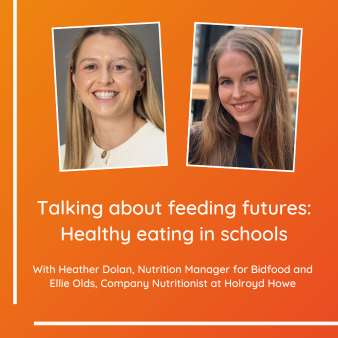
[00:00:03] Speaker A: Hello and welcome to the Talking Food with Bidfood podcast. I'm Georgia, customer marketing executive at Bidfood. In this episode we'll be discussing healthy eating in schools with Ellie Olds. She's company nutritionist at Holloway Towel, who cater exclusively for independent schools. I also have with me Heather Dolan, our nutrition manager here at bigfood. So do join us as we delve into nutrition within an education setting from Ellie and Heather's unique perspectives.
This episode is proudly brought to you by Lakeland Dairies.
School food often gets all the attention whilst school drinks take a backseat. We know providing the right food and drink choices for children can be challenging, from balancing costs, nutrition and allergens to individual tastes and preferences.
Did you know that bone health is a major concern for over half of secondary school parents? And while three quarters of parents know milk is a great source of calcium, fewer realize it also delivers protein, iodine and vitamin B12. So with 52% of students citing a lack of availability as the top reason for not drinking milk at school school, make sure your fridge is fully stocked up with Lakeland's Viva Milk today. For more information and to explore the role that milk can play in helping schools fuel the next generation, take a look at Lakeland's Viva report fueling Gen Z.
So welcome to the podcast, Ellie, and welcome back, Heather.
It's great to have you.
Ellie, could you introduce yourself and tell us a bit more about your role, please?
[00:01:56] Speaker B: So I am Ellie Old, I'm registered nutritionist and I head up the nutrition team for Holroyd Howe. So Holroyd Howe are contract caterers and we solely cater for independent schools across the country. So we work with pre preps all the way up to sixth form colleges and boarding schools.
So kind of targeting a lot of different people and pupils.
My role is really varied. So today I'm doing a podcast, but I could be doing education sessions, whether that's with three year olds talking about eating the rainbow to working with kind of elite sports teams talking about the importance of sports nutrition.
I also work closely with our chef teams, so helping with kind of menu development and menu balance.
Also training our teams and training our chefs on the importance of nutrition and also then working closely with our kind of marketing team to come up with different healthy eating initiatives as well.
[00:02:58] Speaker A: Thank you, Ali and Heather, could you do the same and introduce yourself from a wholesale perspective?
[00:03:05] Speaker C: Yeah, thanks, Georgia. So my name's Heather, I'm also a registered nutritionist, same as Ellie and and essentially I lead on Bidfood's approach to nutrition and healthy eating.
So as everyone probably knows, we supply all sorts of out home sectors, from healthcare to pubs and restaurants and of course education.
And essentially I support our internal teams and our customers on all things nutrition.
So from an education perspective, this could be working with customer marketing on guides or our education newsletter, or could be working with culinary on menu cycles and recipes or answering customer queries. So same as Ellie, really varied. Every day is different. But yeah, great to support all of our, all of our schools, universities and colleges.
[00:03:57] Speaker A: Perfect, thank you both. It's going to be really great to sort of get an insight into this topic from two different parts of the feed supply chain.
So Ellie, what would you say your approach to healthy eating is? Is there anything in particular that you have to keep a close eye on when you're developing recipes?
[00:04:16] Speaker B: So at Holland Howe, we're a fresh food company, so all of our meals are made from scratch on site every day. So this enables our chefs to make lovely, healthy, balanced and nutritious options for children. Which focuses on whole foods and ingredients where we can.
So in terms of nutrients or we really want to have a big focus on fibre, omega 3 and plant based proteins, I think they're some of the nutrients that a lot of the the population are lacking in. And there was a recent NDNS survey which assesses the diet and nutrient intake of the general population of the uk.
And in terms of fibre, it found that children aged 11 to 18 and adults 96% don't actually meet the fibre recommendation, which is 30 grams a day.
So within our menus we're trying to look at ways to increase the fiber intake. So whether that's through a variety of different plant foods, whole grains, looking at utilizing the salad bars as well where possible to really encourage pupils to build their meals and boost their dishes with this fibre.
When it comes to Omega 3, main source of Omega 3 is from oily fish, which we can struggle to get on the menu sometimes. Whether that's through pupils not wanting to eat fish, also from a cost perspective is quite expensive. So if pupils aren't going to eat it, then that can be a little bit of a waste. So again it's thinking about ways that we can kind of use that oily fish in different ways. Again utilizing the salad bar to try and increase that omega 3 content where possible.
And then finally the plant based proteins, so using a variety of sources. So whether that's from a range of different beans, lentils, chickpeas, maybe some kind of soya products as well. But really focusing on those, those whole kind of minimally processed foods where possible.
Then we've talked about the foods that we want to increase, but there's obviously some nutrients that we want to kind of reduce as well. So obviously a big one would be sugar.
So reducing the free sugars in things like desserts and snacks as well, maybe focusing on having kind of the, the natural sweetness from fruit. So trying to utilize fruits in desserts and snacks as much as. As we can.
But there's. I don't think there's no point kind of trying to do this without actually supporting our teams, but also kind of encouraging pupils as well to, to eat healthier.
So across our schools, we always try to encourage pupils to try new things. So whether that's from kind of tasting tables or chef tables, using different produce in different ways, which they might not have tried before, so kind of making different foods accessible as well, and making kind of pupils and young children particularly kind of aware of these different pieces of produce. And then finally, it's making food fun and having positive, memorable dining experiences. So food is such like a personal thing to everyone and I think everyone's got memories of their school meals. So I think it's really important, like we're in such a crucial time of children's lives that we want to make it as positive and memorable as we can.
So making food fun, tasty, nutritious, delicious as well.
So, yeah, we do do lots of different things to try and encourage pupils to eat a little bit healthier.
[00:07:55] Speaker A: And Heather, is this sort of similar to your approach at Bidfood?
[00:08:00] Speaker C: Yeah, I would say so. So, as I mentioned earlier, we develop menu cycles for primary schools and we also have recipe concepts for secondary school that aim to compete with the high street.
So I would say the first thing that I am looking for when I'm working with the chefs is that our recipes meet the school food standards.
But same as Ellie, I will then look beyond the school food standards and look at certain nutrients. So again, I'll make sure that the levels of fat, sugar and salt aren't too high.
Within Menu Planner, which, which is our sort of online tool for recipe analysis and menu development, we do have the traffic light labeling which is quite useful, so I'll try and make sure there are no reds for fat, sugar and salt.
And again, I will also look at the, the positive nutrients. So look at the amount of protein in a dish, look at the amount of fibre, try and make the dish a source of fiber or maybe even high in fiber, depending on what it is.
And same as early oily fish can be a little bit of a tricky one also from a cost perspective. But we, we always make sure to sort of work those positive nutrients in as well. Basically a big, big balancing act, you know, trying to create recipes that the kids are going to love and be excited by, but they're also nutritious and keeping the cost down. So definitely keeps us on our toes.
[00:09:32] Speaker A: That's great. It sounds like you're both very much aligned within your approaches.
And Ellie, as you work within an independent school setting, you don't have to use the school food standards.
[00:09:44] Speaker B: Yes. So independent schools don't have to follow the school food standards, which could be. It could be a blessing and a curse because, as I said, like, chefs get full autonomy of the menus. But obviously we want to try and keep those guidelines in place to help keep the menus nice and balanced and nutritious where possible. So we've kind of developed our own, which kind of follow the school food standards, but we try to go above and beyond a little bit, so we still focus on having that variety. So when we're thinking about those starch carbohydrates, trying to get whole grain carbohydrates kind of, kind of as default really, to again, increase that fiber and increase lots of different, different nutrients.
When we're thinking about things like red meat, again, it's kind of following the guidelines where not having it maybe more than twice a week. And when we're thinking about boarding schools, we're looking at having that no more than five times a week as well. So it's really thinking about, I think, from that boarding perspective, which maybe the school food standards don't necessarily kind of follow.
But in the same breath, when we're thinking from those boarding schools, they are kind of up. That's their home. So we still want to have those home comforts as well, and making food enjoyable and fun, but still nutritious at the same time.
[00:11:06] Speaker A: It sounds like you take a really proactive approach.
I like that you've based your standards on the school food standards, but sort of used your expertise to modify them for independent schools.
And Heather, could you give us a quick update on the school food standards and what we can expect in this space?
[00:11:25] Speaker C: Yeah, of course. So in June this year, the government announced that they're going to expand free school meal provision. So from September next year, all households that receive universal credit will also qualify for free school meals. So this is estimated to be an additional half a million children that are eligible for free School meals.
And the government also announced that they're going to quickly update the school food standards to align with the latest nutrition guidance.
So we will be waiting to hear more in this space. At Bidfood, we engaged with the Department of Education on the updated standards and what they could look like.
Education is actually our second largest sector that we supply to, so we supply to about 6,000 primary secondary schools and sixth form colleges across England and Wales, which is about 25% of the market.
So quite a significant impact and we will continue to look for opportunities to feed in our experience and expertise in this area. And Ellie, I was hoping you could give us a quick overview of the new standards for early year settings and whether you're going to use these as part of your role.
[00:12:35] Speaker B: Yes, definitely. So the Department of Education have brought out new kind of EYFS guidelines. So they're for early year settings for children under the age of five.
So there's kind of a big focus on having that variety again for the, for these pupils. But I think a key area that it looks at is kind of the sugar intake. So for the children under the age of five, they shouldn't be having the added sugar. So there's a big focus kind of on the snack menu. So these snacks should be nutritious. So fruit, vegetables have a starchy carbohydrate rather than more of those kind of high sugar snack options. And the same with puddings as well. So puddings aren't necessarily required. So it's kind of moving away from that kind of traditional sponge and custard option every single day, which again, can be packed full of sugar for kind of these little, little bodies. So it's not saying that we have to kind of eliminate the puddings completely, but if we are offering them, then they should be that reduced sugar, kind of mainly fruit based as well. But I really think it's a, it's a step in the right direction. So we've worked closely with our health and safety team as well. So within the guidelines, there's obviously a big focus on the nutritional point of view, but we're also looking at allergens, choking, also weaning. So, yeah, we've worked closely with our team and created some training as well for our own chefs and managers to follow, because when new guidelines come out, it can be a bit of a minefield. So we want to be able to give our teams as much support as possible kind of with these new guidelines.
[00:14:18] Speaker A: Thank you, Ellie and Heather, and join us in part two in a few moments.
Welcome back to the podcast. Let's get into innovation. With so many food and drink options in the out of home sector and the constant stream of food trends on social media, at bigfood we make a conscious effort to keep menus exciting and also nutritionally balanced for children.
Ellie, how do you stay on top of trends to keep menus fresh and appealing for children?
[00:14:56] Speaker B: This sets you really good plug for you guys, but bid food are really good when it comes to trends. For our kind of central food team, we've been on a couple of your food safaris around London and Manchester, which always just a really good day out and just to see kind of the different, different trends and things that are going on in the food scene. And a couple of our new concepts actually that we've developed this year have come off the back of them. So they, they're really helpful and yeah, good, good way to stay on trend.
[00:15:26] Speaker A: That's amazing that you're using our food and drink trends. Really pleased to hear that, Heather. It must be nearly time for our 2026 trends. Can you give us any teasers?
[00:15:37] Speaker C: Yeah. So first of all, really great to hear that you're using our trends, Ellie. We always love to hear where customers are putting it all into action.
This year the trends are launching on the 1st of October and we've got some really great content coming. So I recently went on a food safari with our research team and we visited all the venues that align with this year's trends.
And as always, we've got our one health focused trend this year which I've been supporting on. So last year it was friendly fiber and this year, whilst I can't reveal what it is just yet, I will say it ties in really nicely with what lots of our education customers are already prioritizing.
So yep, stay tuned for lots of tips and recipes and product suggestions within that.
[00:16:22] Speaker A: And what about healthier initiatives? Ellie, is there anything you're currently working on that brings this all together for children in your schools?
[00:16:30] Speaker B: Yeah, so we've got a lot going on at the moment. So a big campaign that we're following is Beans is How. So that's a global campaign and the aim is to double the global bean consumption by 2028. So beans are great, they're nutritious, they're great for the environment, they're delicious.
So we're really trying to promote kind of using beans on the menu and again trying to link it back to children and pupils and again making it fun. So looking at different recipes where we can use beans going around the world and linking to different kind of marketing days as well.
In October we're having a big push on gut health and this is for both our peoples but also for our teams. So we've got a massive workforce force. So it's really important that we're, we're looking after them and encouraging them to, to look after them theirselves. So yeah, so gut health, how we can improve our gut health, whether that through our kind of our plants. So looking at 30 plants, which is another kind of big maybe say trend in the health and kind of well being space at the moment, but also trying to make it child friendly again. So making it fun. So setting little challenges within classrooms or year groups to try and eat as many different plants. Main looking across a week but also looking across a term as well. Thinking about seasonality and just have that variety on the menus. And then one initiative that is going on at the moment or campaign is snacktember. So snacktember is a campaign run by the bnf, which is the British Nutrition Foundation.
So following that and it's all about healthier snacking and how we can make snacks that little bit healthier.
So we've helped develop some healthier recipes for our chefs and our schools to use which looked at reducing those kind of refined sugars but boosting them with vitamins, minerals, fibre, which will really help with their growth, development, their kind of supporting them within the classroom, but then also on the sports fields as well.
[00:18:35] Speaker A: And finally we know that budget is always top of mind for food service operators. Could you both share some of your favorite cost effective ingredients or dishes that deliver on that nutrition?
[00:18:47] Speaker B: I'm gonna have to say beans.
So definitely beans, our lentils, our legumes, but also looking at kind of like those frozen produce. So thinking about frozen fruit, frozen veg, frozen fruit a great way, kind of in the morning again, if you're in a rush, kind of throw them into to a dish or a smoothie and it's a, it's a good way to reduce the food waste as well.
[00:19:10] Speaker C: So I'd completely agree with Ellie on beans and pulses. I heard something the other day on a podcast which I thought was really nice, that they are a win, win, win. So for health, for climate and for cost and it is also great to see fibre in general getting more attention nowadays. I feel like it's one of the most sort of overlooked and underrated nutrients, especially historically.
So my first suggestion would definitely be incorporating more beans and pulses into dishes we like to use like red lentils. In sauces or in curries, they sort of thicken them up nicely, add more texture and add more nutrients, of course. And another thing is we sometimes reduce the amount of meat in a dish and then add in additional beans and pulses. So, for example, a risotto with some chicken, but a little bit less chicken than usual. And then you could add butter beans and asparagus.
And I would also agree on the frozen and also tinned fruit and vegetables. I recently did some, some research into this, actually, and found that because it's a common misconception that the frozen and tinned fruit and veg maybe don't have as many nutrients in, but actually quite often they can have the same or sometimes even more, depending on what the food is. And also I think it's quite nice to keep an eye on seasonality as you can also get some lower costs through eating seasonally. And as Ellie mentioned, just looking out for food waste. So perhaps with leftover fruits or vegetables, whether that's peel or perhaps fruit and veg that don't look nice, they're sort of wonky or whatnot. Just trying to find ways of using those up, whether it's in a soup or a sauce or a smoothie.
So just trying to make the most of every ingredient, really.
[00:21:06] Speaker B: Yeah. Heather, I completely agree with you on all of those points, particularly with the using the plant proteins in meat dishes. So we do it quite fair bit, but particularly in those wet dishes where we're reducing some of that meat content and increasing with plant protein. But I think actually an education piece is actually quite important there because as soon as people think you're reducing that meat content, then they're immediately not getting enough protein or the protein that they need. And there's a big, big hype on protein at the moment and how much we all need to be eating. But actually by adding in those beans, those lentils, those chickpeas, we're still adding in protein, but we're still getting those nutrients that we really require, like the fibre. And actually it makes it a much kind of more well rounded dish.
[00:21:56] Speaker C: Yeah, definitely.
[00:21:57] Speaker A: Thank you, Ellie and Heather, for joining me today. It's been really great to talk about how you're supporting children of eat nutritious food that will support their learning and development.
It sounds like you've got some really exciting future projects in the works and I'm looking forward to seeing these come to life. So thank you, Ellie, thank you, Georgia, and thank you, Heather.
[00:22:20] Speaker B: It's been, it's been really good experience and good to chat about all things nutrition.
[00:22:25] Speaker A: Thank you Heather.
[00:22:27] Speaker C: Thanks Georgia, and thanks Ellie for coming on and chatting with us today.
[00:22:34] Speaker A: Thank you so much for listening. We hope that you found this episode insightful and it sparks some inspiration for your own menus. At Bidfood, we welcome upcoming changes in the nutrition landscape and remain dedicated to helping our customers provide the best for children.
Be sure to visit our Education Sector page on our website where you can browse our existing education menu cycles and nutrition support or also make sure to follow Talking Food.
That way you'll be the first to hear about all of our future episodes. Until next time, Goodbye.